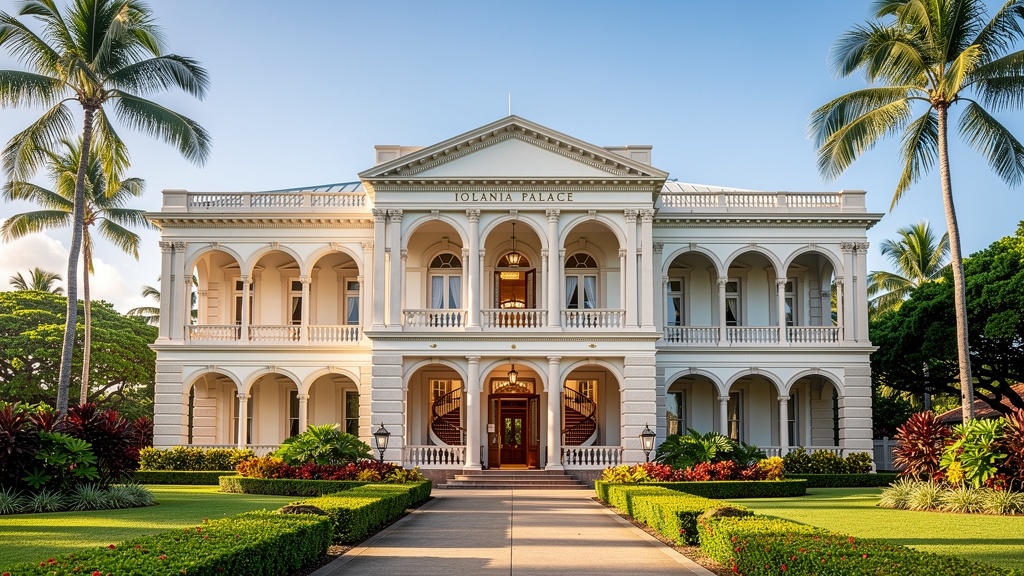
Iolani Palace (Oahu)
The only royal palace in the United States — home of the Hawaiian monarchy and a powerful story of its overthrow.

Culture & History
Hula, heiau, language, and place names carry centuries of meaning. The best way to experience Hawaiian culture is to approach it as a guest, not a spectator.
The foundation
Use the ʻokina (glottal stop) and kahakō (macron) correctly — Hawaiʻi, not "Hawaii". A few words go a long way.
Heiau (temples) are sacred. Stay off the structures, don't move rocks, and follow posted rules.
Choose Hawaiian-owned tours, farms, and businesses. Culture is not a costume — it's a living economy.
Places to visit
The only royal palace in the United States — home of the Hawaiian monarchy and a powerful story of its overthrow.
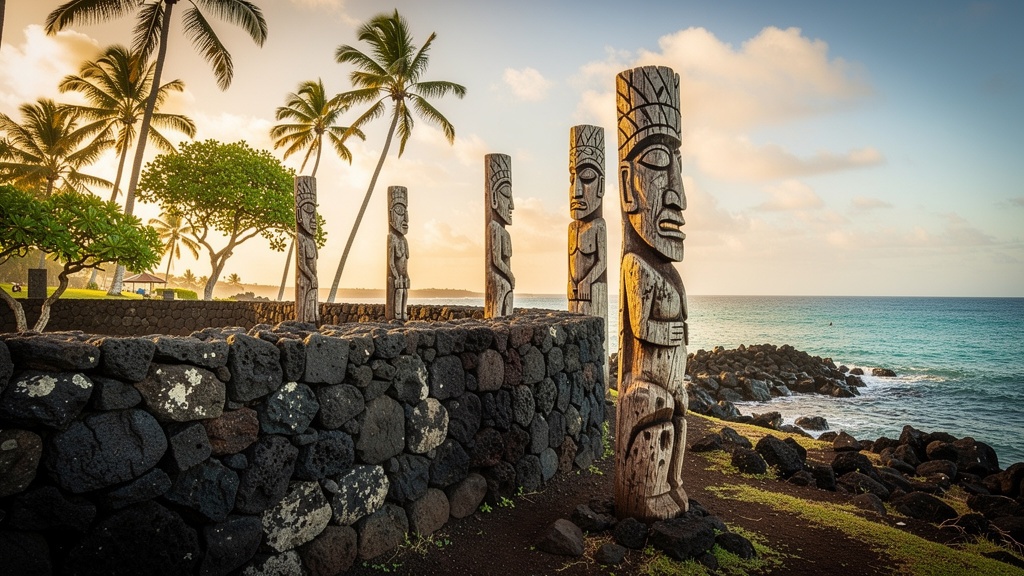
The Place of Refuge — a sacred site where ancient lawbreakers could find sanctuary. Walk quietly and respectfully.
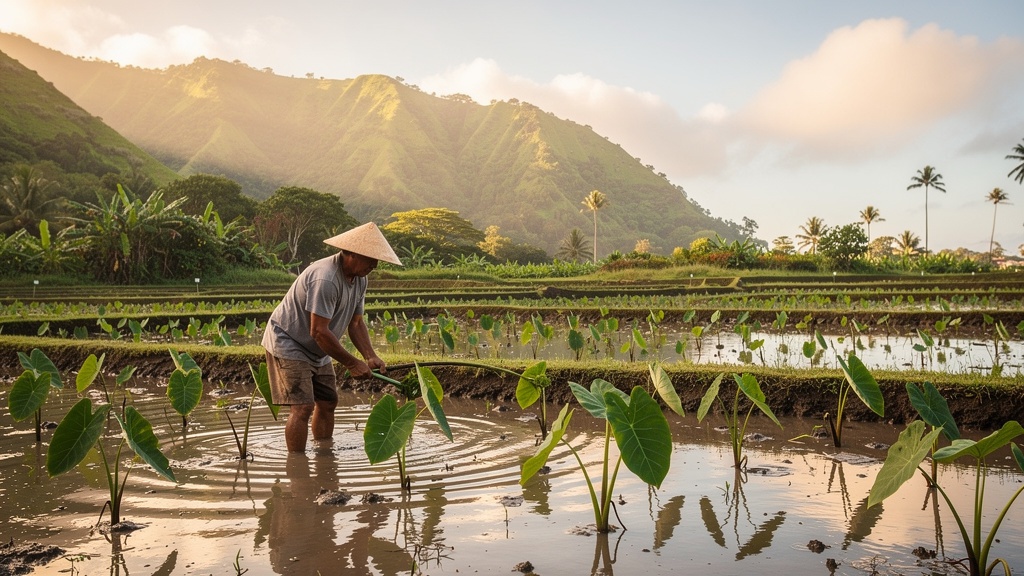
Join a guided taro (kalo) patch visit or cultural farm tour to learn about food, land, and community firsthand.
A short history
Hawaiʻi was an independent kingdom for centuries before becoming a US state in 1959. That history shapes everything — including how visitors are received today.
Polynesian voyagers arrived around 1,000 years ago. The Kingdom of Hawaiʻi unified in 1810 under Kamehameha I, and the monarchy lasted until its overthrow in 1893. Hawaii became a US territory in 1898 and the 50th state in 1959. Native Hawaiian culture was suppressed for generations and is now experiencing a powerful revival — language schools, hula halau, and land stewardship are thriving again.
Regenerative tourism means leaving the place better than you found it. See our Mālama Hawaiʻi guide for how.
Hula is a living art form — best experienced at a hula halau or cultural festival, not as a photo prop.