Quick answers
Frequently asked questions
Short, honest answers to the questions every Hawaii visitor asks. If you still need help, every page here links deeper.
Answers to common questions about traveling Hawaii.
All questions
No, not if you're flying from the U.S. mainland — Hawaii is part of the United States. You will need a passport only if you're traveling from an international destination.
The U.S. dollar (USD). Credit cards are accepted almost everywhere, including most small plate-lunch spots. Apple Pay and Google Pay are widely supported in urban areas.
On Oahu, no — TheBus works well. On Maui, Kauai, Big Island, Molokai, and Lanai, yes — almost all worthwhile experiences require a car. See our transportation page for the breakdown.
April, May, September, and October offer the best balance of weather, crowd levels, and value. Winter (Dec–Apr) is best for whale watching and North Shore surf, but busiest. See our best-time page for the full breakdown.
Yes, for the vast majority of visitors. The biggest risks are ocean-related — high surf, strong currents, and rocky shorelines. Read the lifeguard flags, check conditions daily, and don't turn your back on the ocean. See our safety page.
A meaningful single-island trip is 7–10 days. To visit two islands, plan 10–14 days. Switching islands eats half a day each, so don't try to cram.
Yes, all major U.S. carriers work in Hawaii. Service is strong in towns and resorts but drops on remote coastal roads — Hana, the Road to Hana, North Shore Kauai, and the Volcanoes backcountry are notorious for spotty reception.
For most popular experiences, yes — Haleakalā sunrise, Hanauma Bay, Diamond Head, Waiʻānapanapa, and beyond-2-mile Kalalau Trail all require advance booking. See our reservations page for the full list.
Kīlauea has had active eruptions in recent years. Before visiting Hawaiʻi Volcanoes National Park, check the USGS Hawaiian Volcano Observatory page for current conditions. Eruptions are restful and quiet to watch from designated overlooks.
Hawaii is Hawaii-Aleutian Standard Time (HST), UTC-10, and does not observe daylight saving time. From the U.S. mainland, the time difference is 2 hours behind Pacific and 5 hours behind Eastern in summer, 3 and 5 in winter.
The August 2023 fire was devastating. The historic town remains restricted; some West Maui businesses have reopened and welcome visitors; Lāhainā town itself is closed. Read our Mālama Hawaiʻi page for responsible ways to support recovery.
Travelers can be part of the answer by staying longer, spending locally, volunteering, and respecting closures. Crowds are concentrated at a handful of places — most islands still have room for everyone to be welcomed. See Mālama Hawaiʻi.
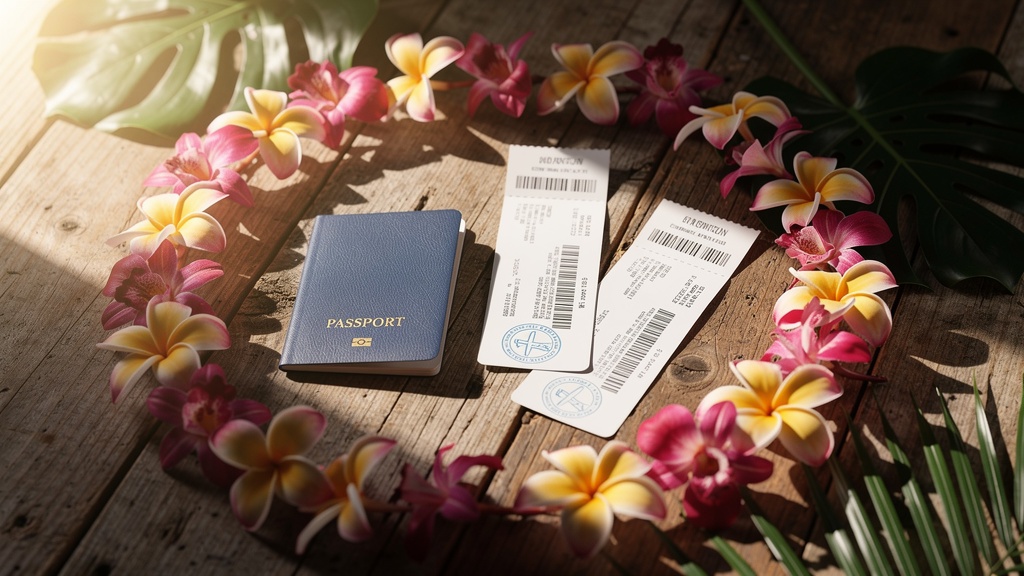
Most Hawaii trips only need a standard ID — passports only for international arrivals.
Quick reference
The 30-second essentials
- Documents: U.S. ID for mainlanders; passport only if international.
- Currency: USD; cards accepted almost everywhere.
- Time zone: Hawaii-Aleutian (HST), no daylight saving.
- Language: English; Hawaiian words are widely used alongside.
- Driving: speed limits are posted in MPH, even though distances use miles.
- Sunscreen: mineral / reef-safe only — others are illegal.
- Wildlife: protected, including sea turtles, monk seals, and reef creatures.