Why Hawaii Is the Ultimate Adventure Destination
Hawaii sits at a rare intersection of geography, climate, and ecological diversity that makes it one of the finest outdoor adventure destinations on the planet. Where else can you start your morning watching the sunrise from a 10,000-foot volcanic summit, spend the afternoon swimming alongside sea turtles in a coral-filled bay, and finish the day hiking through ancient lava fields as the sun sets over the Pacific? This extraordinary range of environments — all accessible within the compact boundaries of island life — is what makes Hawaii's adventure potential unique.
The variety of activities available in Hawaii is genuinely staggering. Water sports enthusiasts will find world-class surfing, snorkeling, scuba diving, kayaking, stand-up paddleboarding, and windsurfing. Land adventurers can pursue hiking on trails ranging from gentle coastal walks to strenuous multi-day wilderness treks. The skies offer helicopter tours, paragliding, and skydiving. And for those who prefer a slower pace, Hawaii's diverse landscape makes it equally rewarding for birdwatching, botanical exploration, photography, and simple scenic driving.
Surfing in Hawaii: The Birthplace of Wave Riding
Modern surfing was invented by ancient Hawaiians, who called it he'e nalu — literally "wave sliding." The sport was embedded in Hawaiian culture centuries before the first Westerner ever saw a surfboard, and Hawaii remains the spiritual center of global surfing today. From the gentle, beginner-friendly rolls of Waikiki to the terrifying, towering barrels of Pipeline and Jaws, Hawaii's surf breaks span the entire spectrum of difficulty and drama.
Waikiki Beach offers the most accessible surf experience in Hawaii. The breaks here — Populars, Canoes, and Queens — are broad, slow-rolling waves that break a long way from shore, giving beginners time to stand up and feel the sensation of wave riding before anything challenging happens. Surf schools operate every morning at Waikiki, with groups of first-timers regularly managing to stand on a board during their first lesson. The warm water, forgiving waves, and attentive instructors make Waikiki's surf schools one of the best introductory surfing experiences in the world.
For more experienced surfers, Oahu's North Shore offers breaks that define the outer limits of what is humanly possible on a surfboard. Pipeline, located at Ehukai Beach Park, produces a wave of extraordinary hollow power that detonates over a very shallow reef, creating a tube-shaped barrel that is simultaneously one of the world's most beautiful and most dangerous. The Triple Crown of Surfing, held on the North Shore each winter, draws the world's top professionals for a sequence of three events that collectively determine the WSL world title.
Maui's north shore offers a completely different but equally legendary surf experience. Peahi — known universally by its nickname "Jaws" — is a deep-water reef that generates some of the largest rideable waves on Earth, with faces regularly exceeding 60 feet during peak conditions. When Jaws is breaking at full power, it can be felt as low-frequency vibration from miles away. Tow-in surfing — where jet skis tow surfers into waves too fast to paddle into — was essentially invented and perfected at this break.

Surfing Spots by Level
- Beginner: Waikiki (Canoes), Laniakea, White Plains
- Intermediate: Sunset Beach (small days), Hanalei Bay, Lahaina Breakwall
- Advanced: Rocky Point, Honolua Bay, Hookipa (Maui)
- Expert only: Pipeline, Backdoor, Waimea Bay closeout
- Tow-in only: Jaws (Peahi), Phantoms
- Lessons available in Waikiki, Kailua, Lahaina, and Hanalei
Snorkeling and Scuba Diving: Exploring Hawaii's Underwater World
The waters surrounding the Hawaiian Islands contain one of the most biodiverse marine ecosystems in the central Pacific, with approximately 25% of Hawaii's marine species being endemic — found nowhere else on Earth. This extraordinary concentration of unique life makes every dive and snorkel a potential encounter with something that exists in no other ocean.
Hanauma Bay, a volcanic crater on Oahu's southeastern coast that was designated a Marine Life Conservation District in 1967, is Hawaii's most visited snorkeling site and one of the world's finest. An education center at the entrance is mandatory viewing before entry, covering the ecology of the bay and guidelines for responsible interaction with its inhabitants. The coral reef that fills the bay's interior shelters over 450 fish species, and snorkelers typically encounter dozens of different species within the first few minutes in the water.
For scuba divers, the night dive at Garden Eel Cove on the Big Island's Kona Coast offers one of the most extraordinary marine experiences on Earth. As darkness falls, Manta alfredi — Pacific manta rays with wingspans reaching up to 18 feet — gather in the bay to feed on plankton attracted by underwater lights. Divers kneel on the sandy bottom while these enormous, graceful creatures swoop repeatedly overhead in barrel rolls, their pale undersides visible in the lights. No touching is permitted, but the proximity of these magnificent animals — close enough to feel the water displaced by their wings — creates an experience of profound natural beauty.
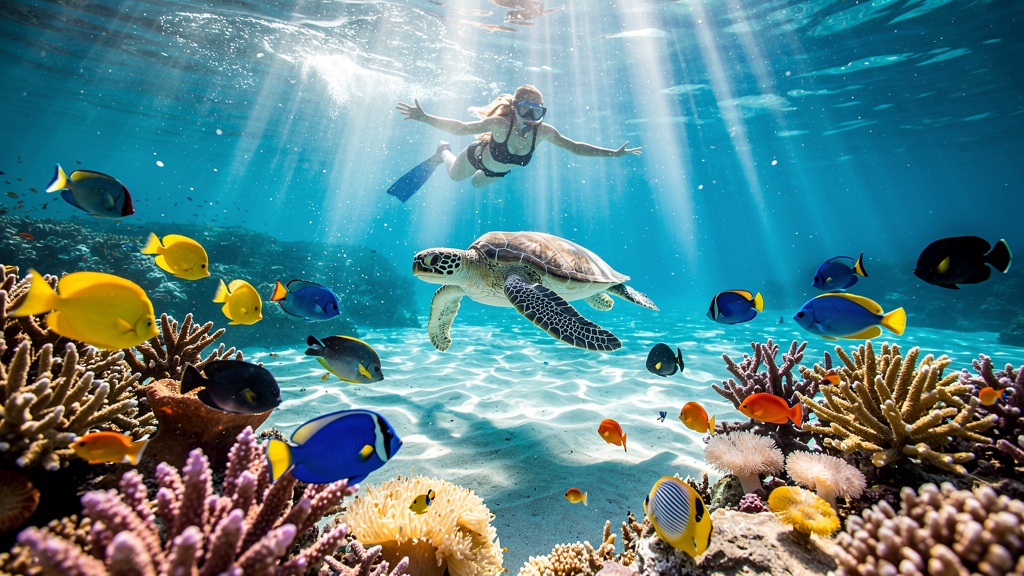
Top Snorkel & Dive Sites
- Hanauma Bay — Oahu's iconic marine sanctuary
- Molokini Crater — Maui's crescent-shaped dive paradise
- Kealakekua Bay — Big Island, spinner dolphins + coral
- Manta Ray Night Dive, Garden Eel Cove — Big Island
- Tunnels Beach (Makua) — Kauai lava tube diving
- Honolua Bay — Maui's pristine reef experience
Helicopter Tours: See Hawaii From Above
For many visitors, a helicopter tour represents the single most awe-inspiring experience in their Hawaiian itinerary. The ability to hover silently above the Na Pali Coast, observe an active lava flow, or peer directly into the enormous caldera of Kilauea from a bird's-eye perspective transforms the visitor's understanding of Hawaii's landscape in a way that ground-based exploration alone cannot achieve.
Kauai helicopter tours typically depart from Lihue Airport and trace a spectacular circuit that includes the Waimea Canyon, the Na Pali Coast, the Hanalei Valley, and the cloud-shrouded summit region of Mount Waialeale — one of the wettest places on Earth, where hundreds of waterfalls cascade from a central plateau that receives over 450 inches of rainfall annually. The combination of vivid green valleys, dramatic sea cliffs, and the glittering Pacific below creates a visual experience of extraordinary intensity.
Big Island helicopter tours frequently include a segment over Hawaii Volcanoes National Park, offering the opportunity to observe active volcanic activity from a safe altitude. When Kilauea or the adjacent Mauna Loa are in eruption, the sight of glowing red lava flowing across the landscape and entering the ocean — creating dramatic steam plumes — is among the most visually spectacular things a person can see anywhere on Earth. Even during periods of reduced surface activity, the helicopter offers unmatched views of volcanic craters, lava fields, and the dramatic contrast between the island's green rainforest and barren lava deserts.
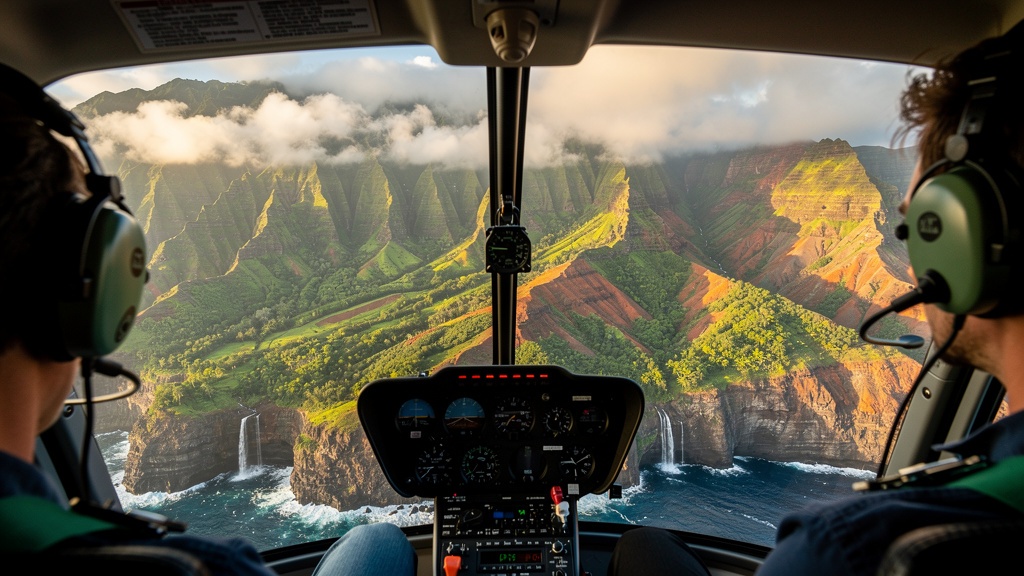
Helicopter Tour Tips
- Book early — tours sell out weeks in advance
- Choose doors-off tours for optimal photography
- Morning flights typically offer best visibility
- Kauai flights: 50–65 minutes, covers Na Pali + Waimea
- Big Island flights: active volcano views when erupting
- Weight limits apply: mention during booking
Ziplining Through Hawaii's Rainforest Canopy
Hawaii's dramatic topography — deep valleys, ridge ridges, and lush rainforests — creates ideal conditions for zipline tours that rank among the most spectacular in the world. Multiple operators across Oahu, Maui, Kauai, and the Big Island offer experiences ranging from modest single-line courses to massive multi-line systems with runs exceeding 3,000 feet in length and heights of hundreds of feet above the forest floor.
The zipline experience in Hawaii is elevated by its setting in ways that are impossible to replicate elsewhere. As you soar above a Maui rainforest, the valley below reveals layer upon layer of tropical vegetation in every shade of green, with views opening to the ocean in the distance. On Kauai, the most dramatic ziplines drop into valleys that appear unchanged since the Jurassic — the same locations that served as filming sites for Jurassic Park's original 1993 release.
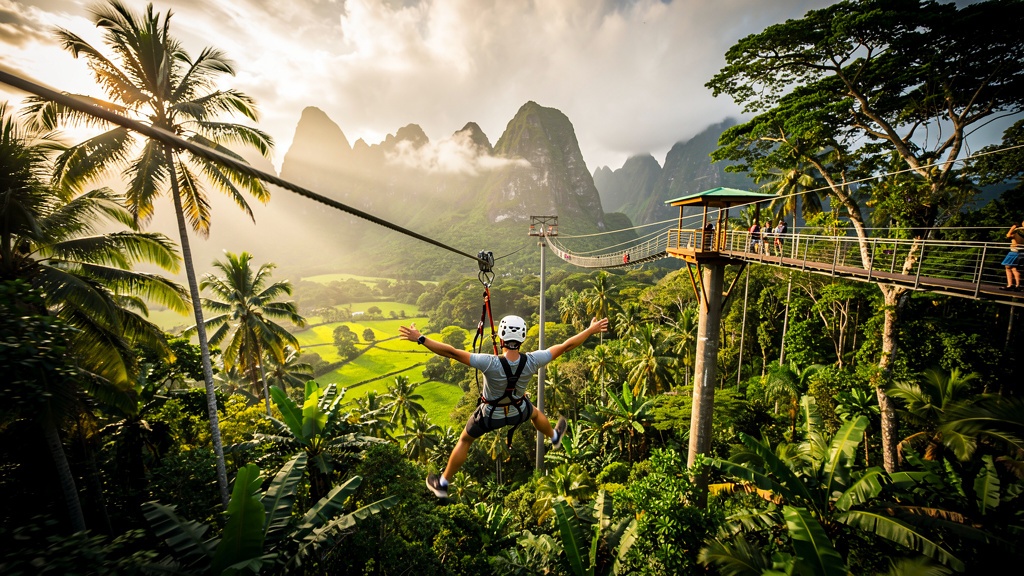
Top Zipline Experiences
- Kapalua Ziplines, Maui — pineapple plantation ridgeline
- Skyline Eco-Adventures, Haleakala — volcanic landscape views
- Cliffhouse Ziplines, Kauai — Jurassic Park valley footage sites
- CLIMB Works, Oahu — North Shore panoramic views
- Kohala Zipline, Big Island — gorge and waterfall scenery
- Minimum age/weight requirements vary by operator
Hiking in Hawaii: Trails That Reveal the Island Soul
Hawaii's hiking opportunities range from gentle, family-friendly coastal walks to strenuous multi-day wilderness expeditions that rival any long-distance trail in North America. The state park system maintains hundreds of miles of trails across all islands, passing through environments as varied as rainforest, lava field, alpine desert, and sea cliff.
The Diamond Head Summit Trail on Oahu is among the most popular hikes in the state, ascending through the interior of the extinct volcanic tuff cone to a summit with panoramic views over Waikiki, Honolulu, and the Waianae Mountains. The trail is 1.6 miles round trip and includes two tunnels and several sets of stairs that follow the original military paths built inside the crater for defensive purposes. Despite its relative brevity, the hike is steep in places and the views from the bunkers at the summit are genuinely spectacular — the kind of view that makes the effort feel like the most worthwhile thing you've done all week.
The Kalalau Trail along Kauai's Na Pali Coast is widely considered one of America's most spectacular hiking trails. Beginning at Ke'e Beach, the trail immediately begins climbing above the ocean, traversing narrow ridgelines and descending into pristine valleys over its eleven-mile route to Kalalau Beach. The trail passes through Na Pali Coast State Wilderness Park, requiring permits for access beyond the first two miles. The full trail should only be attempted by experienced hikers in good physical condition, as sections cross steep, muddy terrain that can be treacherous in wet conditions.
For the most otherworldly hiking experience in all of Hawaii, the Kilauea Iki Trail on the Big Island descends from the rim of the Kilauea Iki crater into its interior, crossing the floor of a lava lake that last erupted in 1959. During that eruption, a lava fountain reached heights of 1,900 feet — the tallest in recorded Hawaiian history. Today, the crater floor is solidified but still emitting heat from the slowly cooling rock below, and the landscape is one of the most alien environments accessible on foot anywhere in the United States.
Whale Watching: Hawaii's Winter Spectacular
Each year between November and May, approximately 10,000 humpback whales migrate from their summer feeding grounds in Alaska to the warm, shallow waters of the Hawaiian Islands to breed and give birth. The waters between Maui, Lanai, and Molokai — known as the Au'au Channel — host the highest concentration of humpback whales in the North Pacific, making Maui the premier whale-watching destination in Hawaii.
Humpback whales are among the most acrobatic of the great whales, and Hawaiian waters give visitors the opportunity to observe behaviors rarely seen elsewhere. Breaching — when a whale launches its 45-ton body almost completely clear of the water before crashing back down with an explosive splash — is the most dramatic of these behaviors. Tail slapping, spy-hopping (rising vertically to observe the surface), and the haunting, complex song of male humpbacks are all regularly observed during whale season.
Whale-watching tours operate from Lahaina Harbor on Maui and from various ports on other islands during the season. Pacific Whale Foundation operates research-based tours that offer the most educational experience, with naturalists explaining the biology and behavior of the whales in real time. Whale watching from shore is also possible at several Maui locations during peak season — looking from a high headland such as McGregor Point, you may see multiple whales simultaneously without leaving dry land.
Haleakalā Summit: Watching Sunrise Above the Clouds
Maui's Haleakalā volcano summit stands at 10,023 feet above sea level, placing it well above the cloud layer that typically wraps the slopes of the mountain. Arriving at the summit before dawn to watch the sunrise has been described by visitors as one of the most profound natural experiences of their lives — and it's easy to understand why. As the sky lightens and the first colors begin to appear over the horizon, the cloud sea below turns orange and gold while the stark, lunar landscape of the crater stretches around you in the early morning silence. Mark Twain witnessed this sunrise in 1866 and described it as "the sublimest spectacle I ever witnessed."
Sunrise reservations for Haleakalā are strictly required and must be made well in advance through the National Park Service website. The summit is typically 30 to 40 degrees Fahrenheit cooler than the coast, so warm layers are essential — many visitors in T-shirts and shorts from beach days are unprepared for the chill at altitude. The drive to the summit takes approximately 1.5 to 2 hours from central Maui, requiring departure around 3 AM to arrive before sunrise.
Many of Hawaii's most popular activities now require advance reservations or permits that sell out weeks or months ahead. Hanauma Bay (daily capacity), Haleakalā Sunrise (reservations required), Kalalau Trail (permit required), and popular snorkeling/dive tours all need advance planning. Book early to avoid disappointment.
More Ways to Experience Hawaii's Adventure Spirit
Stand-Up Paddleboarding (SUP)
Stand-up paddleboarding has exploded in popularity across Hawaii, and the islands offer conditions ranging from flat, glassy bays perfect for beginners to challenging ocean SUP that requires real athleticism and ocean reading skills. Kailua Bay on Oahu's windward coast is frequently recommended as one of the world's best places to learn SUP, with consistent light winds, warm water, and calm conditions inside the bay providing an ideal learning environment. More experienced paddlers enjoy the open ocean SUP routes that connect different points along the coastlines, offering perspectives of the islands accessible only from the water.
Kayaking and Sea Kayaking
Sea kayaking opens up sections of Hawaii's coastline that are inaccessible any other way. On Kauai, sea kayak tours of the Na Pali Coast are one of the most coveted summer experiences in the state, operating when the summer calming of the north shore swells makes the crossing of the coast possible. Tours enter sea caves, pass beneath waterfalls that drop directly into the ocean, and land on pocket beaches at the base of the cliffs that are reachable only from the water. On the Big Island, kayaking on the calm south Kona coast brings paddlers alongside green sea turtles and spinner dolphins in waters of extraordinary clarity.
Mountain Biking and Cycling
Haleakalā downhill cycling — starting at the summit and coasting for 23 miles to the coast — is one of Hawaii's most popular group activities. Operators provide bikes, helmets, warm jackets, and guide support for the descent, which requires minimal pedaling and maximum enjoyment of the extraordinary scenery. For more serious cyclists, the Big Island's Ironman World Championship course — a 112-mile road cycling route across the lava fields of the Kohala Coast — can be ridden in its entirety, offering a very different kind of island adventure.
Stargazing at Mauna Kea
The summit of Mauna Kea on the Big Island, at nearly 14,000 feet above sea level, is one of the world's finest astronomical observation sites. The Onizuka Center for International Astronomy at 9,200 feet elevation offers free evening stargazing programs on most clear nights, with volunteers providing telescopes and expert commentary on the night sky. The view of the Milky Way from Mauna Kea is staggeringly beautiful — a dense river of stars stretching from horizon to horizon with a clarity that most people have never experienced.
Horseback Riding
Hawaii's varied terrain makes it one of the most scenically rewarding horseback riding destinations in the world. Rides are available across multiple islands, ranging from gentle beachside plods in the sunset to full-day adventures through ranch land on the Big Island's Kohala Coast or Kauai's Hanalei Valley. The Parker Ranch on the Big Island is one of the largest cattle ranches in the United States and offers trail rides that provide genuine insight into Hawaii's paniolo (Hawaiian cowboy) heritage — a cultural tradition that developed when Mexican vaqueros were brought to Hawaii in the 1830s to teach the Hawaiians cattle ranching.