Hawaii's Beaches: A World Apart
Hawaii possesses one of the most diverse collections of beaches found anywhere on Earth. Unlike the uniformly sandy shores of many tropical destinations, Hawaiian beaches reflect the complex geology of a volcanic archipelago in extraordinary ways. You will find beaches of pure white coral sand, beaches of coal-black volcanic basalt, beaches tinged in rich green olivine, and even rare beaches of red cinder. Each beach tells a geological story millions of years in the making.
The state counts approximately 60 miles of white sandy beach across its islands β a seemingly small figure that belies the intensity of experience these shores deliver. The relatively compact stretches of sand are surrounded by pristine, clear, warm water that is among the most biodiverse in the Pacific. Hawaii's position in the middle of the Pacific Ocean means its coastal waters are free from the river sedimentation that clouds many tropical beaches, resulting in visibility that can exceed 100 feet in ideal conditions.
Understanding Hawaii's beach culture also means understanding its rules and rhythms. The ocean here is powerful and should be treated with deep respect. Every year, swimmers and snorkelers underestimate the power of Hawaiian waves, rip currents, and surge. State beach safety flags, lifeguard advice, and local knowledge are invaluable resources that every visitor should heed carefully.
Always check ocean conditions before entering the water in Hawaii. The state's ocean safety program posts daily surf reports, and most beaches have information boards. Never turn your back on the ocean, avoid rocky shores in surge conditions, and never swim alone at unguarded beaches.
Lanikai Beach, Oahu: The Platinum Standard of Island Beauty
If there were a single beach in Hawaii that embodied the word "paradise," Lanikai would be the strongest contender. Located on Oahu's windward coast, in the residential neighborhood of Kailua, Lanikai is a half-mile stretch of almost impossibly fine white sand, its granules so soft and pure that walking barefoot feels like padding across warm silk. The water in front of Lanikai transitions through a palette of blues and greens so vivid that photographs almost appear color-enhanced β but they are not.
What makes Lanikai distinctive beyond its sand and water is the view it offers of the two small offshore islands known collectively as Na Mokulua or "The Mokes." Moku Nui and Moku Iki sit just a half-mile offshore, their vegetated profiles providing a focal point of extraordinary beauty at sunrise, when the sky behind them turns gold and rose. Paddlers and kayakers frequently make the crossing to explore the tide pools and bird nesting grounds on Moku Nui, which is open to visitors.
Access to Lanikai requires navigating through a quiet residential neighborhood, which helps preserve the beach's tranquility. There are no hotels on Lanikai Beach, no vendors, and no large parking lots β factors that keep the crowds manageable even during peak tourist season. The best approach is to arrive early, ideally before 8 AM, to secure one of the limited street parking spaces and enjoy the beach at its most serene, with the morning light painting the water in extraordinary colors.
Lanikai Beach At a Glance
- Location: Kailua, windward Oahu
- Sand type: Ultra-fine white coral sand
- Best for: Swimming, kayaking, sunrise photography
- Water clarity: Exceptional β typically over 50ft visibility
- Lifeguards: No β swim with caution
- Parking: Limited street parking only
- Best time: Dawn to 10 AM
- Nearest town: Kailua (excellent for breakfast and coffee)
Punalu'u Black Sand Beach, Big Island: Nature's Most Dramatic Canvas
At the opposite end of Hawaii's beach spectrum from Lanikai lies Punalu'u, a black sand beach on the Big Island's southeastern coast that represents one of nature's most striking geological artworks. The fine jet-black sand here is composed of basaltic lava that was rapidly quenched and shattered as it met the ocean during volcanic eruptions, the individual grains ground smaller over millennia by wave action. The result is a beach that absorbs heat dramatically, turns warm in the morning sun, and provides a startling visual contrast against the deep blue Pacific.
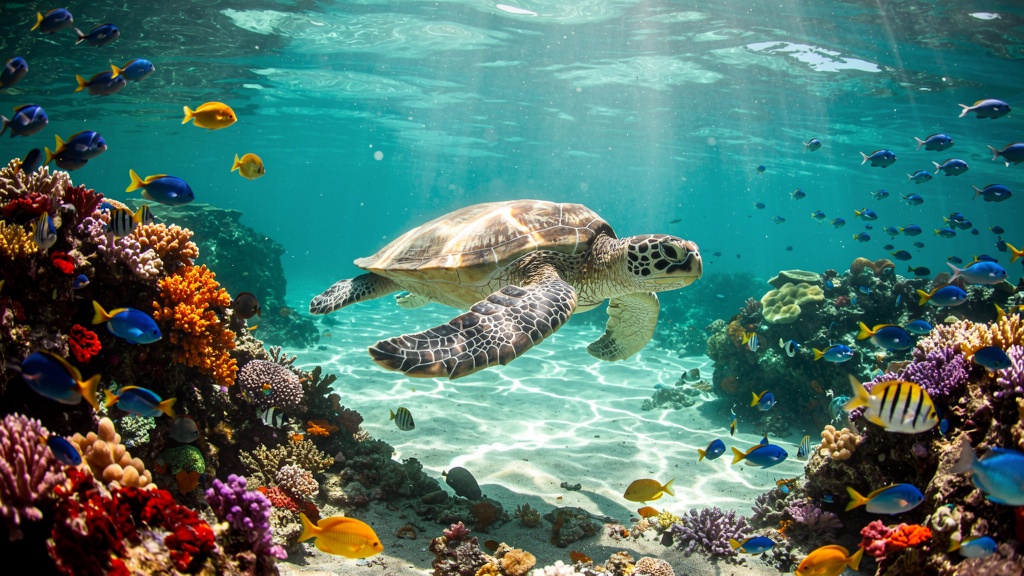
Punalu'u would be remarkable for its striking appearance alone, but what elevates it to legendary status is its population of Hawaiian green sea turtles. These magnificent reptiles, which can weigh up to 400 pounds and are considered sacred in Hawaiian tradition, regularly haul themselves out of the water to bask on the black sand. Seeing a creature of such ancient lineage resting peacefully on volcanic sand, with the sounds of waves and wind around it, is an experience of profound natural beauty.
Federal and state laws protect Hawaiian green sea turtles, and it is illegal to approach within six feet or touch them in any way. Despite this, the turtles at Punalu'u seem remarkably tolerant of respectful human presence, often resting within easy camera range of visitors. Rangers from the Hawaii Division of Aquatic Resources occasionally visit the beach to monitor turtle populations and educate visitors about their conservation status.
Punalu'u Black Sand Beach
One of the world's most visually striking beaches, Punalu'u draws visitors from around the globe for its dramatic black volcanic sand and resident sea turtle population. A must-visit on any Big Island itinerary.
- Location: Ka'u district, southeastern Big Island
- Sand type: Fine black volcanic basalt
- Best for: Wildlife watching, photography
- Wildlife: Hawaiian green sea turtles (honu)
- Swimming: Possible but check for currents
- Facilities: Restrooms, picnic areas, parking
Na Pali Coast, Kauai: The Coastline the World Dreams Of
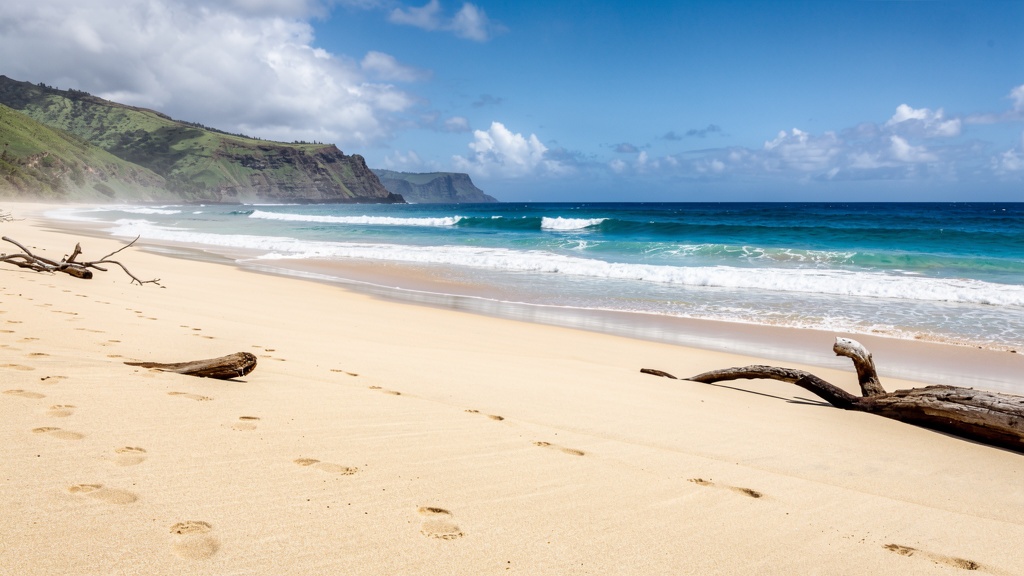
The Na Pali Coast on Kauai's northwestern shore is not a single beach but a seventeen-mile stretch of the most dramatically beautiful coastline in the Hawaiian islands β and arguably one of the most spectacular coastal landscapes on Earth. The name translates simply as "the cliffs," and the sheer scale of what confronts you when you first see Na Pali β whether from the water, the air, or the end of the Kalalau Trail β makes the modest name seem like a profound understatement.
The cliffs of Na Pali rise to heights of over 4,000 feet in places, their green faces carved into impossibly graceful shapes by millions of years of rain and wind erosion. Dozens of narrow, lush valleys cut back into the cliffs, each accessible only from the sea or by trail. Waterfalls cascade hundreds of feet from the cliff tops into the ocean, and sea caves carved by the relentless Pacific swell create opportunities for ocean kayakers to explore darkened chambers resonating with the sound of moving water.
The only beach accessible by land along Na Pali is Kalalau Beach, reached after an eleven-mile one-way hike along the challenging Kalalau Trail. This remote beach, hemmed in by towering cliffs, is one of the most remote and spectacular in the state β a reward for the physically fit. Camping at Kalalau requires a permit, which should be booked months in advance given their limited availability and high demand.
Experiencing Na Pali
There are several ways to experience this extraordinary coastline, each offering different perspectives and levels of access.
- By air: Helicopter tours provide the most dramatic overview
- By sea: Kayak tours (summer only) or boat tours year-round
- By foot: Kalalau Trail (11 miles, strenuous, permit required)
- From above: Pu'u O Kila Lookout at Kokee State Park
- Snorkeling: Sea caves and clear waters accessible by boat
- Camping: Kalalau Beach (permit required β book months ahead)
Snorkeling Hawaii's Beaches: An Underwater World Beyond Compare
Hawaii's warm, clear waters host some of the most extraordinary snorkeling in the world, with over 3,000 species of marine life found in Hawaiian coastal waters. Approximately a quarter of Hawaii's marine species are endemic β found nowhere else on Earth β including colorful reef fish such as the Humuhumunukunukuapua'a (Hawaii's state fish), the brilliant orange and white moorish idol, and the golden-faced butterflyfish.
Top Snorkeling Beaches
- Hanauma Bay, Oahu β premier marine sanctuary with 450+ fish species
- Molokini Crater, Maui β crescent-shaped crater with 100ft visibility
- Tunnels Beach (Makua), Kauai β dramatic lava tubes and coral formations
- Kealakekua Bay, Big Island β spinner dolphins and pristine coral gardens
- Honolua Bay, Maui β vibrant coral reef and abundant sea life
- Kapalua Bay, Maui β calm, family-friendly, reef-protected bay
Maui's Best Beaches: The Valley Isle Delivers
Maui is consistently voted the world's best island in travel rankings, and its beaches are a significant part of why. The island's varied geography β from the leeward resort coast to the windswept north shore β creates beach conditions that suit everything from family swimming to world-class windsurfing.
Kaanapali Beach, on Maui's western coast, stretches three miles along the resort corridor, flanked by major hotels and lined with beach activities. While it is the island's busiest beach, its consistent gentle surf, warm water, and beautiful setting make it perpetually popular. The landmark Black Rock at the northern end of Kaanapali is a cliff-diving spot used in ancient Hawaiian ceremony and now a beloved gathering point for snorkelers and cliff jumpers.
For those seeking more seclusion, Hamoa Beach in the village of Hana on Maui's eastern coast has been described by travel writers as one of the most beautiful beaches in the Pacific. Reached via the Road to Hana and accessible by a staircase cut into the hillside, Hamoa is a curved dark-sand beach backed by high tropical vegetation, where the surge of the open Pacific and the privacy of the remote setting combine to create something genuinely extraordinary.
Oahu's North Shore: The Mecca of Surfing Culture
Between November and February, the beach parks stretching along Oahu's North Shore β particularly the stretch between Haleiwa Town and Sunset Beach β transform into the world stage for professional big-wave surfing. The Eddie Aikau Big Wave Invitational, held at Waimea Bay when waves reach 30 feet or more, is perhaps the most iconic event in surfing, drawing competitors from around the world and thousands of spectators to the beach.
Banzai Pipeline, located at Ehukai Beach Park, is arguably the most photographed surf break on Earth. The shallow reef just offshore creates a perfectly shaped tube wave that is simultaneously one of the most beautiful and most dangerous in the world. During big swells, professional surfers ride barrels here that can swallow them whole, emerging with salt-bleached stories of survival. Even as a spectator standing on the beach watching these waves, the raw power of the ocean is palpable and humbling.
During summer months (May through September), the North Shore undergoes a remarkable transformation. The giant swells subside, and the same beaches become calm, clear swimming spots with gentle waves perfect for beginners learning to surf. The change is so dramatic it is difficult to believe it is the same coastline that was threatening life and limb just a few months prior.
The Green Sand Beach: Hawaii's Geological Marvel
One of the world's rarest types of beach, the green sand beach at Papakolea on the Big Island's Ka'u district owes its distinctive coloring to olivine crystals eroded from the volcanic cone that surrounds it. Olivine is a semi-precious mineral that forms at extremely high temperatures deep within volcanic lava flows. Over thousands of years, wave action has concentrated the denser olivine crystals while washing away the lighter material, creating an olive-green sand that glitters in the sun.
Reaching Papakolea requires either a 2.5-mile hike each way across exposed lava fields or a fee-based shuttle ride (drivers are local landowners). The remoteness ensures the beach never becomes overcrowded, and the extraordinary color of the sand β which ranges from brownish green to vivid emerald depending on lighting conditions β makes the effort entirely worthwhile. Swimming here is possible but conditions can be rough; the real reward is simply being present in one of the world's most unusual natural environments.
Beach Facilities and Practical Information
Hawaii's state beach parks provide a solid foundation of visitor facilities across the islands. Most include parking areas, restrooms, outdoor showers, picnic shelters, and barbecue grills. Lifeguards are stationed at many of the most popular beaches, particularly on Oahu where the state invests significantly in ocean safety infrastructure. Beaches within national park boundaries (such as those near Hawaii Volcanoes National Park) have their own rules and facilities.
Many of Hawaii's most beautiful beaches are accessible only on foot, by boat, or by four-wheel-drive vehicle. This intentional lack of infrastructure at remote beaches helps preserve their natural character and discourages the sort of mass tourism that has compromised many beach destinations worldwide. Visitors prepared to walk a trail, paddle a kayak, or navigate a rough road are rewarded with experiences of extraordinary natural beauty in genuine solitude.
Hawaii's beaches are fragile ecosystems under increasing pressure from visitor numbers. Please pack out all trash, never remove sand, coral, or rocks, keep a respectful distance from all wildlife, and use reef-safe sunscreen to protect the coral reefs that make these beaches so beautiful.
Planning Your Hawaii Beach Holiday: Seasonal Considerations
Understanding Hawaii's seasonal patterns allows beach visitors to plan their trips for optimal conditions. The winter months from October through April bring large north and northwest swells to the north-facing shores of all islands, making these beaches unsuitable for swimming but spectacular for surf watching. The same period brings calmer conditions to south-facing shores, where summer swells have subsided.
Summer months from May through September reverse this pattern, with south swells energizing the southern shores and calming the northern beaches. For families with children seeking safe swimming conditions, summer is generally the better choice for most beaches. However, summer also brings the year's highest visitor numbers and hottest temperatures, so early mornings become particularly valuable for a peaceful beach experience.
The trade winds, which blow from the northeast for most of the year, create a consistent "windward" and "leeward" distinction across all islands. Windward coasts tend to be cooler, wetter, and greener, with surf more consistent but conditions less predictable. Leeward coasts in the rain shadows of the mountains are typically sunnier, drier, and calmer β which is why most of Hawaii's resort beaches are located on leeward shores.